GDAŃSK
Poland
Gdańsk is a city of the Baltic, where it is worth looking up rather than straight ahead.

Most of its architectural treasures are found above eye level: on gables, cornices, rooftops, waterspouts, window frames, and decorative sculptures. In this way, the city rewards those who take their time and pay attention to details.
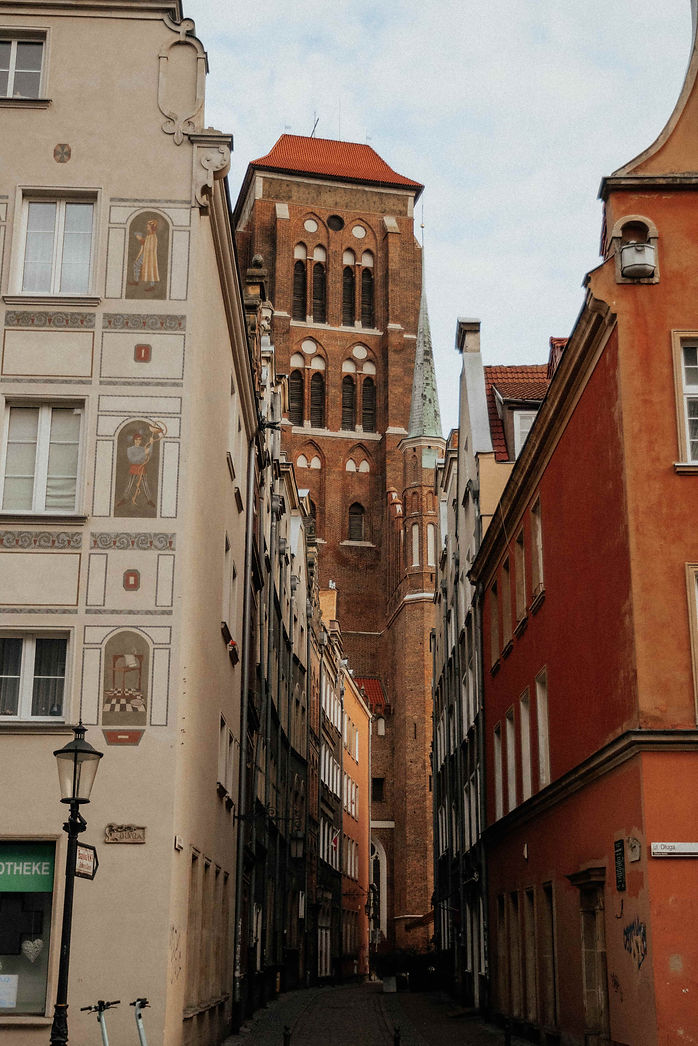

Many houses in the historic center appear unusually narrow. This is a legacy of the medieval trading city, where the value of a property depended on the width of its street-facing façade. Owners built their houses narrow but extended them deep into the block. As a result, behind a modest façade often lay a maze of rooms, warehouses, and inner courtyards.


One of Gdańsk’s most distinctive features is its decorative gables — richly ornamented upper sections of façades rising above the rooftops of historic buildings. During the 16th and 17th centuries, wealthy merchants competed with one another by decorating their homes with sculptures, columns, ornaments, and symbolic figures. Each gable served as a calling card of its owner, reflecting their wealth, profession, or origins.


Because the streets of medieval Gdańsk were narrow, people often viewed buildings from below. For this reason, the most elaborate and expensive decorative elements were placed high on the gables to impress passersby from a distance. This is one of the reasons why Gdańsk is a city best appreciated by looking up.


If you pay close attention to the windows of historic buildings, you may notice that many differ from one another even within the same façade. At a time when glass was an expensive material, the size and shape of windows reflected the status of the homeowner. Large windows were a sign of prosperity and successful trade.


For a photographer, Gdańsk is interesting not so much for its panoramic views as for the endless opportunities to discover details. Here, one can spend hours photographing door handles, stone carvings, dragon-shaped waterspouts, historic staircases, decorative portals, bas-reliefs, and the reflections of colorful façades on wet cobblestone streets.


The Netherlands had a particularly strong influence on the architecture and urban culture of Gdańsk. Thanks to close trade connections with Dutch merchants and craftsmen, many streets of the city still resemble Amsterdam today.


The Main Town Hall of Gdańsk (Ratusz Głównego Miasta) served for centuries as the administrative center of one of the wealthiest and most influential ports on the Baltic Sea. As early as the 16th century, a carillon — a rare musical instrument made up of bells — was installed in its tower, and its melodies rang out across the city, announcing important events.


For centuries, Gdańsk was one of the most important centers of the amber trade. In the Middle Ages, amber was valued so highly that it was often called the “Gold of the Baltic.” Local legend says that after powerful storms, small pieces of amber can still be found washed ashore on the beaches near the city.

The historic center of Gdańsk is included on UNESCO’s Tentative List as a Town of Memory and Freedom. Walking through its streets, it is easy to understand why this city leaves such a lasting impression on its visitors.


My goal as a photographer is to present a place in a way that makes people want to experience it for themselves. If this gallery has inspired you to visit Gdańsk and discover this remarkable city of Poland, then I have achieved my goal.
Would you like your town to inspire future visitors in the same way? If so, I would be happy to discuss your project.